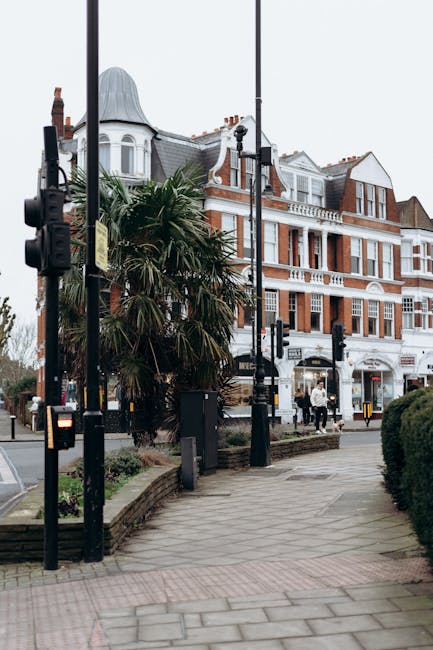
SW13 man and van services for narrow access homes: a practical guide for tricky moves in Barnes
If you live in a narrow access home in SW13, you already know the problem: the move is never just about boxes and a van. It is about tight hallways, awkward turns, steps that seem to appear out of nowhere, and the very real question of how to get a sofa through a doorway that looks too small by about two inches. That is where SW13 man and van services for narrow access homes earn their keep. They are built for the sort of move where planning matters, patience matters, and a calm pair of hands can save the day.
This guide breaks down how these services work, why they matter, what to check before you book, and how to make a narrow-access move in Barnes feel manageable rather than stressful. You will also find a comparison table, a checklist, and a few practical tips that can genuinely save time on moving day. Truth be told, a little preparation goes a long way.
Why SW13 man and van services for narrow access homes Matters
Narrow access homes in SW13 often sit in the kinds of streets where parking is limited, access is shared, and the front door is not exactly designed with wardrobes in mind. Barnes has plenty of character, and with that comes homes with side passages, small entrances, split-level layouts, basement rooms, and staircases that ask a lot of any move. This is where a standard one-size-fits-all removal approach can go wrong very quickly.
A move through a tight entrance needs more than a van. It needs a mover who knows how to plan loading order, judge the space at the door, protect walls and banisters, and keep heavy items under control in confined areas. It also needs a vehicle that can be positioned sensibly without causing a traffic headache or blocking neighbours. If you have ever watched a fridge get turned sideways in slow motion while everyone holds their breath, you will understand why preparation matters.
For many people, the real value is not speed on its own. It is control. The right man and van setup reduces the chance of knocks, delays, broken fittings, and last-minute panic. It is especially useful for older properties, terraced homes, mews-style layouts, and places where the route from room to road is more complicated than it first looks.
If your move also involves packing up odd-shaped items or dismantling furniture, services such as packing and unpacking support and furniture pick-up can make the whole process a lot smoother. Not glamorous, maybe, but very useful.
How SW13 man and van services for narrow access homes Works
A narrow-access move usually starts with a proper assessment. That might be over the phone, through photos, or during a quick look at the property if the job is more involved. The important thing is not fancy jargon; it is understanding the actual route out of the home.
Good movers will want to know a few simple things:
- How wide the doorway, hallway, and staircase are
- Whether there are steps at the entrance
- Where the van can park safely
- Whether bulky furniture needs dismantling
- If the road access is tight or shared
- Whether there are time limits or loading restrictions
From there, the move is planned around the route. That often means loading the van in a logical order, using protective blankets and straps, and bringing the right handling equipment. In some cases, the team will recommend a smaller vehicle or a revised timing window so access is easier. Sounds simple, but that small change can be the difference between a neat move and a very long afternoon.
There is also a practical side to the scheduling. Narrow streets in Barnes can become awkward at school run time, in the evening, or when residents are all trying to park at once. A mover who understands the local rhythm can work around that. You do not always need more muscle. Sometimes you need better timing.
If you are comparing moving options, it helps to understand the difference between a general man and van service, a broader removal services package, and a full-house approach like house removals. Narrow-access homes often benefit from a more tailored setup rather than a bigger, less flexible one.
Key Benefits and Practical Advantages
The biggest benefit is obvious: better fit for the property. But there is more to it than that.
- Less risk of damage - Tight spaces can be unforgiving. A careful mover protects corners, bannisters, flooring, and doors.
- More efficient loading - When access is awkward, the order of loading matters more than usual. Smart packing saves time.
- Better vehicle choice - Not every move needs a giant truck. In fact, a more manageable removal van or similar vehicle may be the better fit.
- Lower stress - People often underestimate how much mental energy a narrow-access move can take. A calm team helps enormously.
- More flexibility - Man and van services can often adapt to awkward entry points, split loads, or staged moves.
There is also a practical financial angle. You are less likely to pay for unnecessary capacity if you choose a service sized for your property rather than a generic full-scale removal package. That said, the cheapest option is not always the best. If access is difficult, cutting corners can become expensive very quickly.
Expert summary: For narrow access homes, the best move is usually the one that is planned around the property, not forced through it. Measure first, pack carefully, choose the right vehicle, and leave room for a slower, safer load-out.
For some jobs, especially if you are moving a mix of household items and a few heavier pieces, it can help to look at the wider range of movers and man with a van options available. The right match depends on access, volume, and how much handling you actually need.
Who This Is For and When It Makes Sense
This kind of service is a strong fit for anyone whose home makes moving a little more complicated than average. That includes:
- Flat owners and tenants with narrow staircases
- People living in older Barnes properties with compact entrances
- Homes with basement access, side gates, or shared passageways
- Residents moving bulky furniture through awkward internal layouts
- Small household moves where a full lorry would be overkill
- Anyone needing a careful, flexible service rather than a large-scale removal crew
It also makes sense if you only have a partial load. Maybe you are moving out of a one-bedroom flat, or you are sending furniture to storage, or you need a few large items moved from one address to another. In those cases, a traditional large removal company can feel too much. A smaller, more responsive service is often the better call.
Commercial customers can benefit too, especially if they need equipment or office items moved through tight access points. For that, it may be worth looking at commercial moves or even office removals where the access problem is part of a wider relocation.
And if you are still in the research stage, the page on removals near me can help you think through the local service landscape without overcomplicating things. Sometimes keeping it simple is the best strategy. Really.
Step-by-Step Guidance
Here is a sensible way to approach a narrow-access move in SW13.
- Walk the route from room to van. Look at doors, corners, stairs, garden paths, and parking. If it feels tight to you, it will probably be tight for furniture too.
- Measure the awkward bits. Door width, staircase width, clearance around banisters, and any low ceilings or sharp turns. A tape measure and a quick phone photo can save a lot of bother.
- Sort items by difficulty. Tall wardrobes, sofas, beds, white goods, and glass furniture need special attention. Smaller boxes are easier; the bulky stuff drives the plan.
- Decide what to dismantle. If an item can be taken apart safely, do it. But keep the fixings together. No one enjoys assembling a bed frame while searching for screws on the landing.
- Book the right size vehicle. A move in a narrow street may work better with a smaller, more manoeuvrable vehicle than a larger truck.
- Protect the property. Floor coverings, blankets, and corner protection help prevent small chips and scuffs that become annoying later.
- Load in reverse order of use. Essentials should be last into the van and first out at the new place. You will thank yourself later.
- Leave a little time buffer. Narrow access almost always takes longer than a straight, open move. Not dramatic. Just reality.
If you want the move handled by a team that is used to careful handling, it is worth reading the details of a broader man and van removals service and how it sits alongside simpler removals support. That distinction matters more than people think.
Expert Tips for Better Results
A few small choices can make a big difference on the day. Here are the ones that tend to matter most.
- Send photos before moving day. Not just of the items, but of the access route, entrance, and parking area. One picture of a tight stairwell is worth a long explanation.
- Clear the path fully. Shoes, baskets, lamps, mats, and random plant pots are all classic trip hazards.
- Keep fragile items separate. Do not bury them under heavier boxes just because there is space. Space is not the same thing as safety.
- Label awkward items. "This end up," "glass," or "needs dismantling" is practical, not fussy.
- Choose the right time of day. Early starts can be calmer in SW13, especially where parking gets tighter later on.
- Check ceiling height and gate width. It sounds basic, but it is the sort of detail people forget when they are focused on the van itself.
One small but useful habit: keep a short list of anything you do not want loaded until the end, like medication, paperwork, chargers, or valuables. It avoids that horrible moment where you realise the important folder is somewhere under three duvets and a toaster. We have all had those moments, and they are never charming.
If you are moving and also need help with a few extra tasks, services such as home moves or house movers can offer a more complete moving day structure. That can be especially useful when access is tight and you want one team to carry the plan through from start to finish.
Common Mistakes to Avoid
Most narrow-access problems are avoidable. The trouble is, people often only see them once the van is already outside.
- Not measuring properly. Guessing is risky. A sofa that seems fine in the lounge may stall at the landing.
- Forgetting parking realities. A van that cannot get close enough creates extra lifting and extra time.
- Booking the wrong size service. Too small and you need multiple trips. Too large and manoeuvring becomes a problem.
- Leaving furniture assembled when it should be dismantled. Some items are simply not designed to travel intact through narrow routes.
- Ignoring fragile surfaces. Fresh paint, narrow hallways, and polished flooring can all take a hit if nobody plans for protection.
- Underestimating time. Tight access almost always slows things down. It just does.
A common one is assuming the mover will "figure it out" on arrival. Professional teams can solve a lot, but they still need enough information to plan properly. That is the difference between expertise and magic. And even the best team is not a magician, despite appearances on some mornings.
Tools, Resources and Recommendations
You do not need a big toolkit for this sort of move, but a few useful items make the job easier.
- Tape measure for doors, stairs, and furniture dimensions
- Protective blankets to reduce scuffs and impact
- Furniture sliders for heavier items on suitable floors
- Straps and tie-downs to keep items stable in transit
- Marker pens and labels for room-by-room organisation
- Dust sheets or floor protectors for narrow hallways and entrance paths
It also helps to use the service pages as a guide to the kind of move you actually need. A quick look at man with van removal, removal van, and removal truck hire can clarify whether you need a nimble local setup or something with more capacity.
For jobs involving furniture only, the furniture pick-up page is useful. For larger or more structured moves, removal company and removal companies can help you compare what level of support makes sense.
Law, Compliance, Standards, or Best Practice
For most household moves, the main compliance concerns are practical rather than complicated. The mover should handle items safely, operate vehicles responsibly, and respect access, parking, and property boundaries. In the UK, that usually means working in line with normal road safety expectations, insurance requirements, and sensible manual handling practices.
For customers, the important thing is to choose a provider that is transparent about its policies and careful with your property. If you are moving items through shared areas, it is wise to think about building rules, neighbour access, and any local parking restrictions. Those are not glamorous topics, but they can make or break the day.
It is also sensible to check that the business explains its approach to safety, payments, privacy, and complaints clearly. Pages such as health and safety policy, insurance and safety, payment and security, terms and conditions, and privacy policy are all useful trust signals when you are deciding who to book.
If the move involves sustainability concerns, such as reuse or disposal of unwanted furniture, you may also want to review recycling and sustainability. That is a sensible habit whether you are moving one room or a whole house.
Options, Methods, or Comparison Table
Not every move through a narrow entrance needs the same kind of service. Here is a simple comparison to help you think it through.
| Option | Best for | Strengths | Possible limits |
|---|---|---|---|
| Man and van | Smaller loads, flexible access, local moves | Agile, practical, often easier in tight streets | Less capacity for very large moves |
| Man with a van | Single-room or partial moves, furniture-only jobs | Simple, efficient, good for compact properties | May need extra care if there are many heavy items |
| Removal van | Moderate home moves where access is still manageable | Balanced capacity and manoeuvrability | Can be awkward if the street or entrance is extremely tight |
| Removal truck hire | Larger relocations or full-house moves | High capacity, useful for bigger inventories | Less convenient on narrow roads and tight access points |
The short version? If your home access is genuinely tight, smaller and more flexible usually wins. Bigger is not always better. Sometimes it is just bigger.
If you are weighing up broader moving support, the links between moving van, removal van, and moving truck can help you judge capacity against access. The best option is the one that fits both the street and the staircase.
Case Study or Real-World Example
Imagine a two-bedroom flat in SW13 with a narrow internal staircase and a front entrance set back from the road. The main pieces are a bed frame, a sofa, a dining table, a fridge freezer, and six or seven boxes of household items. Nothing outrageous. But the route from flat to pavement includes a tight turn at the bottom of the stairs, a small threshold step, and limited parking outside.
In that kind of job, the sensible approach is not to force a large van into the closest space and hope for the best. A better plan is to check measurements first, dismantle the bed frame, protect the hallway, and load the heaviest items first while the access route is clear. If the parking situation changes by mid-morning, the crew can still adapt because the move was planned with flexibility in mind.
That is usually how these jobs go in real life. Not dramatic. Just a lot of small good decisions made in the right order. And honestly, that is what keeps the day calm.
A customer in that situation will often find the move feels less like a scramble and more like a well-managed handover. The house is awkward, yes. But awkward does not mean unworkable.
Practical Checklist
Use this before moving day if you are arranging SW13 man and van services for narrow access homes.
- Measure doorways, hallways, stairs, and any tight corners
- Take photos of the access route and parking area
- List all bulky or fragile items separately
- Decide what needs dismantling before the move
- Clear hallways, entrances, and landings
- Check whether the van can park close enough to the property
- Confirm whether floor and wall protection will be used
- Label boxes clearly by room and fragility
- Keep essentials, documents, and valuables aside
- Allow extra time for loading and unloading
One more small thing: if there are neighbours nearby, let them know when the move is happening. A quick heads-up can avoid inconvenience, especially on a tight street where access matters to more than one household.
Conclusion
Narrow-access moves are rarely about brute force. They are about planning, patience, and choosing a service that understands how real homes work. That is why SW13 man and van services for narrow access homes are such a practical choice for Barnes residents who need a careful, flexible move without the hassle of a larger operation that does not suit the property.
If you prepare the access route, measure the difficult spots, and choose the right level of help, the move becomes much easier to handle. Not effortless, maybe, but definitely easier. And on moving day, easier is a very good thing.
Get a free quote today and see how much you can save.
When a move is planned well, even a narrow hallway can feel a lot less intimidating by the end of the day.
Frequently Asked Questions
What makes narrow access homes harder to move in SW13?
Narrow access homes often have tight doorways, small staircases, awkward turns, or limited parking outside. That makes loading and unloading slower and increases the risk of minor damage if the move is not planned carefully.
Are man and van services suitable for basement or split-level homes?
Yes, often they are a very good fit. Basement and split-level properties usually benefit from a flexible team that can handle stairs, restricted entry points, and furniture that may need dismantling.
How do I know if I need a man and van service rather than a larger removals option?
If you have a smaller load, tight access, or limited parking, a man and van setup is often more practical than a large removals vehicle. For bigger household moves, a broader removals service may be more suitable.
Should I measure my furniture before booking?
Yes, absolutely. Measuring furniture and access points helps avoid unpleasant surprises on moving day. It is especially important for sofas, wardrobes, beds, and appliances.
Can a sofa or wardrobe be moved through a narrow staircase?
Sometimes, yes, but it depends on the dimensions and the shape of the route. In many cases, dismantling the item first is the safer and easier option.
What should I send the mover before the job?
Photos of the entrance, staircase, hallway, parking area, and the bulky items are usually the most useful. A few clear pictures can help the mover plan properly and choose the right approach.
Is parking a big issue for narrow-access moves?
Very often, yes. If the van cannot park close enough, the team has to carry items further, which adds time and effort. On some streets, timing the move carefully is just as important as the van itself.
Do I need to dismantle furniture myself?
Not always, but it helps if you can. Some movers can dismantle items as part of the job, though it is best to check in advance. Either way, keep screws and fittings together in a labelled bag.
How can I reduce the risk of damage in a tight property?
Clear the route, use protective coverings, label fragile items, and make sure the mover knows about any difficult corners or steps. Good planning is usually the best protection.
Are narrow-access moves more expensive?
They can be, depending on how much extra time, handling, or planning is needed. That said, the right small service can still be more cost-effective than booking a larger vehicle that is awkward to use in the street.
What if I am moving just a few items, not a whole house?
That is exactly where a smaller, flexible service can work well. Furniture-only jobs, partial loads, and single-room moves are all common reasons people book this type of transport.
How do I choose a trustworthy mover?
Look for clear information on safety, insurance, pricing, and service terms. Pages such as about us and insurance and safety can help you understand how the company works before you book.